Industry News

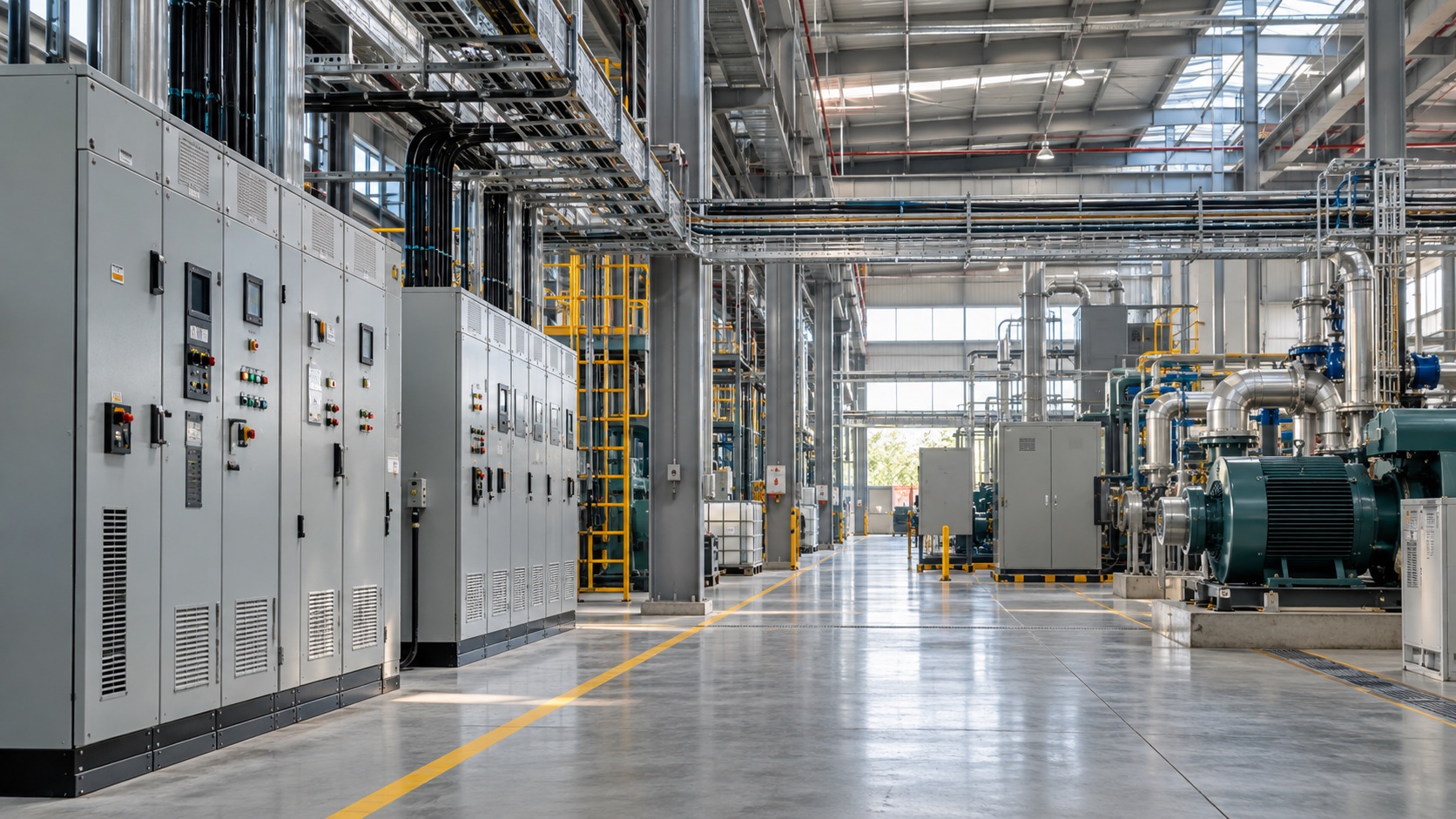
With the rapid advancement of Industry 4.0 and the global energy transition, power stability has evolved from a utility requirement into a core competitive variable for modern enterprises. This article explores the functional positioning of Class S (S-Grade) digital power quality analyzers within critical distribution loops, compares mainstream industrial communication protocols, and analyzes the latest 2024-2025 R&D trends, including Edge AI and Digital Twin integration.
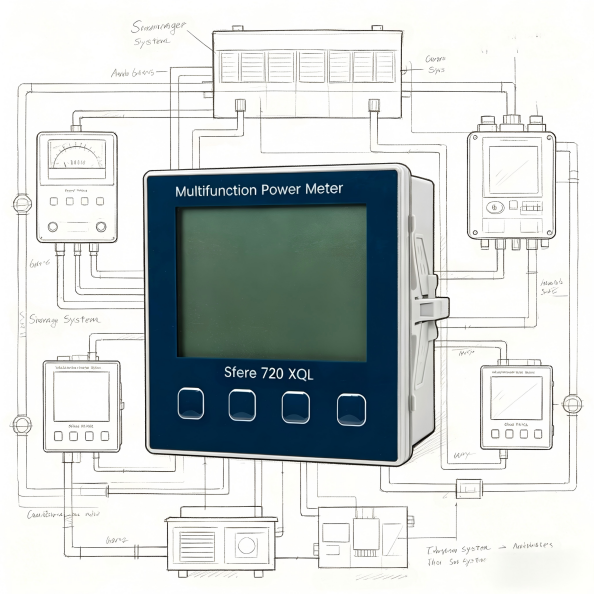
1. Introduction: The Bedrock of Digital Distribution
In the landscape of modern electrical engineering, the IEC 61000-4-30 standard serves as the global benchmark for power quality measurement. While Class A devices are reserved for laboratory-grade precision, Class S analyzers offer the optimal balance of performance and cost-efficiency. They have become the "eyes of data" for facility managers, enabling large-scale, distributed monitoring across complex industrial and commercial power networks.
2. Functional Positioning in Critical Distribution Loops
A Class S analyzer is more than a meter; it is a diagnostic instrument tailored to the specific characteristics of different electrical loads.
A. Main Incoming Feeder: The Grid Gatekeeper
The incoming cabinet is the primary interface between the utility grid and the internal network. Monitoring here focuses on Responsibility Demarcation. By tracking voltage fluctuations, flickers, and THD (Total Harmonic Distortion), Class S devices determine whether a disturbance originates from the utility provider or is self-generated by internal non-linear loads.
B. Reactive Power Compensation: Asset Protection
Capacitor banks are extremely sensitive to harmonics. Class S analyzers in this loop monitor Harmonic Current in real-time to prevent capacitor overheating or rupturing caused by harmonic resonance. They also evaluate transient inrush currents to optimize switching algorithms and extend contactor life.
C. Variable Frequency Drive (VFD) Loops: Pollution Tracking
VFDs are major sources of harmonic "pollution." By measuring harmonic distortion up to the 50th order, Class S devices provide the empirical data required for the precise deployment of Active Power Filters (APF), preventing motor vibration, overheating, and premature insulation failure.
D. Sensitive Load Branches: The Event Recorder
In semiconductor fabrication plants or data centers, a millisecond-level Voltage Sag can trigger a catastrophic production halt. Class S devices capture these transient events and generate ITIC (CBEMA) curves, allowing engineers to perform rapid root-cause analysis for equipment reboots.
3. Communication Framework: The Neural Network of Power Data
For Industrial IoT (IIoT) integration, the choice of protocol determines the system's latency and scalability.
|
Protocol |
Physical Layer |
Speed |
Application Environment |
Key Advantage |
|
Modbus-RTU |
RS-485 |
9.6-115.2kbps |
Small-scale cabinet integration |
Low cost, universal compatibility. |
|
Modbus-TCP |
Ethernet |
10/100 Mbps |
Facility-wide EMS / Cloud |
High bandwidth, multi-client support. |
|
ProfiBus-DP |
Twisted Pair |
Up to 12 Mbps |
Heavy Industry / Siemens PLC |
Robust noise immunity in EMF zones. |
|
ProfiNet |
Industrial Ethernet |
100 Mbps+ |
High-end automated production |
Real-time response, TSN integration. |
4. 2024-2025 R&D Trends: The Evolution of "Active Intelligence"
The Research and Development (R&D) landscape for digital power quality analyzers is shifting from passive recording to proactive intelligence.
I. Edge AI and Electrical Signature Recognition
A major R&D frontier is the embedding of lightweight AI engines within Class S hardware. Rather than just recording raw waveforms, devices now utilize Non-Intrusive Load Monitoring (NILM) algorithms to identify "Electrical Fingerprints." For instance, by analyzing subtle current distortions, the analyzer can predict motor bearing wear or transformer partial discharge, moving the industry from reactive maintenance to Predictive Maintenance.
II. Digital Twin and Virtual Mirroring
R&D teams are increasingly integrating analyzers into Digital Twin platforms. By creating a real-time virtual mirror of the distribution system in the cloud, high-frequency data from Class S devices can simulate how specific grid disturbances might affect production lines, allowing for "what-if" testing of protection strategies in a risk-free environment.
III. Ultra-High-Speed Transient Capture & Microsecond Sync
While Class S is a mid-tier precision standard, its sampling rates are breaking new ground. Modern R&D is pushing for transient capture rates up to 20MHz to detect lightning surges or high-frequency switching impulses. Coupled with GPS or Beidou time synchronization, devices can achieve 1-microsecond alignment across different nodes, which is crucial for fault source localization in vast distributed grids.
IV. Cybersecurity and Cloud-Native Architecture
As analyzers connect directly to public clouds, Cybersecurity has become a top R&D priority. Next-generation products now feature hardware-based encryption (e.g., TPM chips) and native support for TLS 1.3. Furthermore, the shift toward MQTT and JSON allows for "Agentless" cloud connectivity and Over-the-Air (OTA) firmware updates, ensuring that diagnostic algorithms are always current.
5. Global Market Insights: Regional Adoption Trends
The global demand for Class S analyzers is surging, driven by the complexity of modern energy consumption.
● China: Driven by the "New Infrastructure" initiative and "Dual Carbon" goals, China leads in the adoption of Class S devices for data centers and high-tech manufacturing, with a CAGR exceeding 14%.
● Europe: Faced with high energy costs, European R&D focuses on Energy-Quality Correlation, linking power quality data to carbon footprint tracking and specific energy efficiency audits.
● North America: The focus remains on Grid Resilience. Class S analyzers are being deployed in massive retrofitting projects to help aging infrastructure cope with the voltage instability caused by extreme weather events.
6. Conclusion
The digital power quality analyzer has evolved from a simple display meter into an indispensable intelligent sensing node. By strategically deploying Class S devices across critical loops and leveraging cutting-edge R&D—such as Edge AI and Digital Twins—enterprises can transform their power infrastructure into a strategic asset optimization center.
Please leave us your messages and feedback, our sales engineers are always right beside you.


