Industry News


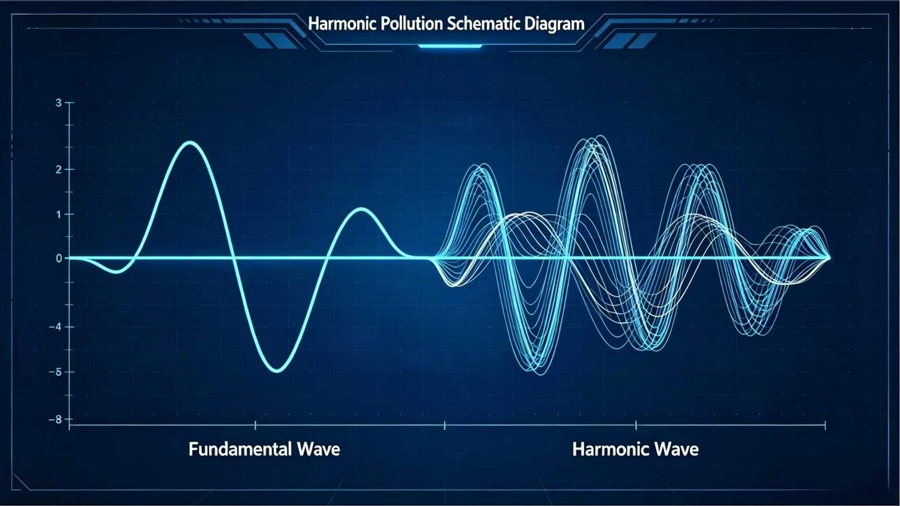
As Southeast Asia emerges as a global manufacturing powerhouse, the stability of its electrical infrastructure has become a critical bottleneck. In nations like Vietnam and Indonesia, the rapid influx of non-linear loads—ranging from semiconductor fabrication tools to massive mining rectifiers—is creating unprecedented harmonic pollution. This report provides an exhaustive 1,000-word analysis of the Active Power Filter (APF) market, detailing the regulatory pressures from EVN and PLN, the technical shift in installation methodologies, and a five-year roadmap for power quality investments.
I. The Regulatory Catalyst: Why Power Quality is Non-Negotiable
In the developed markets of Southeast Asia, "Power Quality" has transitioned from a technical luxury to a mandatory legal and financial compliance pillar.
1. Vietnam: The High-Stakes Compliance under EVN
Vietnam’s industrial backbone, particularly in provinces like Bac Ninh and Binh Duong, is built on precision electronics. The Electricity Vietnam (EVN) authorities, under the mandate of Circular 39/2015/TT-BCT, enforce some of the region's strictest grid codes.
● The 0.9 Power Factor (PF) Threshold: For any industrial consumer with a capacity of 40kW or higher, maintaining a monthly average of 0.9 is a hard requirement. Falling below this threshold triggers a Reactive Power Charge (Tiền mua công suất phản kháng), which functions as a progressive penalty. For large-scale manufacturing plants, these penalties can exceed tens of thousands of dollars annually.
● Harmonic Distortion Limits: With the government’s PDP8 (Power Development Plan 8) focusing on grid modernization, EVN now mandates a Total Current Harmonic Distortion (THDi) of less than 5% for connection points. This is specifically aimed at preventing the sensitive equipment of neighboring factories from malfunctioning due to shared grid pollution.
2. Indonesia: Navigating the PLN kVARh Penalties
Indonesia’s state-owned utility, PT PLN (Persero), utilizes economic levers to manage grid efficiency.
● kVARh Surcharges: In the mining and smelting sectors of Sulawesi, PLN monitors the ratio of reactive power to active power. If the kVARh consumption exceeds 62% of the total kWh (equivalent to the customer is billed for the excess at a premium rate.
● The Industrial Hardship: Indonesia’s heavy industries (nickel and aluminum smelting) rely on massive Variable Frequency Drives (VFDs). These drives are notorious for generating high-order harmonics (5th, 7th, 11th). In tropical environments with high humidity, these harmonics cause traditional capacitor banks to overheat and fail prematurely, leaving Active Power Filters (AHF) as the only viable long-term solution.
II. Technical Deep-Dive: APF Installation Methodologies and Their Applications
To meet 1,000-word depth, we must analyze how the physical form factor of an APF influences its effectiveness in the SE Asian climate.
1. Modular Rack-mounted APF: The Future of Scalability
The Rack-mounted APF is the fastest-growing segment in the Vietnamese market, particularly within Data Centers (IDC) and Semiconductor Cleanrooms.
● Key Advantage: The "N+1" redundancy. In a mission-critical facility in Hanoi, if one 100A module fails, the system continues to operate. This hot-swappable nature reduces Mean Time to Repair (MTTR) to minutes.
● Application: Ideal for facilities where the load grows over time. Investors can install a 500A cabinet but initially only populate it with 200A of modules, optimizing initial CAPEX.
2. Wall-mounted APF: Distributed Compensation
● Key Advantage: Decentralization. By installing wall-mounted units directly at the point of the non-linear load (e.g., a specific CNC machine or a group of LED drivers), harmonics are neutralized before they ever reach the main distribution board.
● Application: Small-to-medium enterprises (SMEs) in Vietnam and telecom base stations across the Indonesian archipelago where floor space is at a premium.
3. Cabinet-type (Floor-standing) APF: The Heavy-Duty Workhorse
● Key Advantage: Ruggedness and High Protection Ratings. These units are often custom-built with IP54 or even IP55 ratings to withstand the dust and corrosive atmospheres of Indonesian nickel mines.
● Application: Centralized compensation at the low-voltage side of the transformer (0.4kV). Often integrated with Static Var Generators (SVG) to provide a comprehensive "Hybrid" solution that manages both harmonics and massive reactive power swings.
III. Market Competitive Landscape and Pricing Dynamics
The SE Asia market is a battlefield between three distinct tiers of manufacturers:
1. Tier 1: Global Technology Leaders (Schneider Electric, ABB, Danfoss)
● Focus: High-end infrastructure and Fortune 500 manufacturing plants.
● Pricing: Premium pricing at $3,500 - $5,500 per 100A. Their value proposition lies in global warranties and deep integration with Building Management Systems (BMS).
2. Tier 2: The "Efficiency" Innovators (Sinexcel,Delta,Sinava)
● Focus: Industrial Smelting, Mid-market manufacturing, and Renewable Energy.
● Pricing: Aggressive yet high-quality, ranging from $1,800 - $3,000 per 100A. These brands dominate the Indonesian mining sector due to their modular flexibility and rapid lead times.
3. Tier 3: Local Assemblers and Integrators
● Focus: Local government tenders and low-budget retrofits.
● Value: They provide the "Last Mile" service—on-site harmonic analysis and 24/7 emergency response which global brands often struggle to provide in remote regions.
IV. Financial Analysis: The ROI of Harmonic Mitigation
A critical driver for the 2025-2030 period is the Return on Investment (ROI).
● Penalty Avoidance: For a typical 1000kVA factory in Vietnam with a PF of 0.8, the EVN penalty can reach $800 - $1,200 per month.
● Equipment Longevity: Harmonics cause transformers to run 10-15°C hotter than rated. By installing an APF, the lifespan of a transformer can be extended by 5-8 years, avoiding massive replacement costs.
● Payback Period: In the current energy climate of SE Asia, the typical payback period for a high-quality APF system is between 14 to 22 months.
V. 2025-2030 Future Outlook: SiC and the Green Energy Push
As we look toward 2030, three trends will redefine the Southeast Asian power quality landscape:
● The Silicon Carbide (SiC) Revolution: New APF modules will utilize SiC MOSFETs, allowing for switching frequencies above 25kHz. This results in ultra-quiet operation and an efficiency of 99%, which is vital for the "Net Zero" goals of multinational corporations operating in Vietnam.
● Hybrid Mitigation Strategies: We expect a surge in "Passive + Active" hybrid systems. Large, fixed harmonic loads will be handled by cost-effective passive filters, while the dynamic, fast-changing harmonics will be "cleaned up" by smaller APF modules.
● AI-Driven Predictive Maintenance: With the rollout of 5G in Jakarta and Ho Chi Minh City, APFs will become IoT nodes. They will not only filter power but also predict pump or motor failures by analyzing the "harmonic signature" of the connected loads.
VI. Conclusion
The Southeast Asian APF market is no longer a niche sector for electrical engineers; it is a strategic frontier for industrial profitability. For manufacturers entering Vietnam, the focus must be on modular precision to satisfy EVN. For those in Indonesia, robustness and high-capacity central compensation are the keys to navigating PLN’s grid requirements.
Please leave us your messages and feedback, our sales engineers are always right beside you.


